


Recently, a high-altitude integrated municipal solid waste incineration project with a treatment capacity of 50 tons per day, fully constructed by Tenor Low-Carbon New Energy Technology (Liaoning) Co., Ltd. using its self-developed complete equipment system, successfully achieved first-time ignition. The equipment is operating stably, and all environmental protection and combustion performance indicators have met the required standards.
This project has effectively solved common industry challenges in high-altitude areas, including low atmospheric pressure, oxygen deficiency, severe cold temperatures, and low-calorific-value waste. It provides a replicable benchmark for the harmless and low-carbon treatment of municipal solid waste in remote plateau regions and demonstrates the company's core competitive advantages across the entire value chain of low-carbon solid waste management.

Challenges of Plateau Solid Waste Management and a Customized Solution
High-altitude regions generally face practical challenges such as low atmospheric pressure, oxygen levels that are only 60%–70% of those in lowland areas, severe winter cold, dispersed villages and towns, and high waste transportation costs. Conventional incineration equipment designed for lowland conditions often encounters problems under such circumstances, including insufficient furnace temperature, incomplete combustion, frequent flameouts, black smoke and odors, excessive dioxin emissions, and high energy consumption.

Traditional landfill disposal not only occupies scarce land resources but also generates leachate and greenhouse gases that continue to damage the fragile plateau ecosystem, hindering improvements in the local living environment and ecological protection efforts.
The project service area is characterized by a dispersed population, mixed municipal waste with high moisture content, and significant fluctuations in calorific value. Strict requirements were therefore placed on equipment reliability, ultra-low emissions, low-carbon operation and maintenance, and compact land use.

Drawing on years of experience in low-carbon solid waste treatment and the development of specialized high-altitude equipment, Tenor Low-Carbon abandoned standardized general-purpose furnace designs and established a dedicated technical team to conduct on-site investigations of altitude, temperature, and waste composition. The company customized a 50 TPD moving grate municipal solid waste incineration system specifically designed for extreme high-altitude operating conditions and provided a one-stop solution covering process design, equipment manufacturing, engineering installation, intelligent operation and maintenance, and environmental compliance.
Four Core Advantages Supporting Stable Project Operation
1. Self-Developed High-Altitude Combustion Technology Enables Stable Self-Sustaining Combustion in Low-Oxygen Environments
As a high-tech enterprise in Liaoning specializing in low-carbon new energy and solid waste resource utilization, Tenor Low-Carbon has mastered an improved 3T+E reciprocating grate waste incineration technology adapted to high-altitude operating conditions.
To address low-pressure and oxygen-deficient environments, the company redesigned the furnace structure, optimized the multi-stage precision air distribution system, and equipped the system with customized high-altitude booster fans. These measures maintain stable furnace temperatures above 850°C, ensure a flue gas residence time exceeding two seconds, and provide sufficient turbulence and mixing.
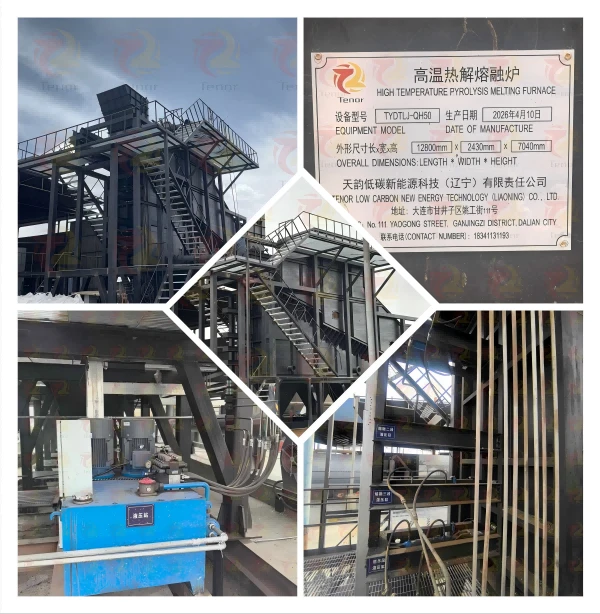
This guarantees complete combustion of low-calorific-value waste, eliminates black smoke and odors at the source, and ensures thorough decomposition of dioxins to levels better than the national emission standards.
Unlike similar equipment on the market that requires continuous auxiliary fuel support and incurs high operating costs, Tenor's technology significantly reduces fuel transportation and procurement costs in plateau regions, aligning with low-carbon and energy-saving development goals and adapting well to areas with limited energy supply.
2. Integrated Full-Chain Service and Local Manufacturing Shorten Project Delivery Time
Tenor Low-Carbon integrates technology research and development, equipment manufacturing, engineering construction, intelligent operation and maintenance, and environmental upgrading into a single service system.
All major equipment, including the incinerator, flue gas purification system, intelligent central control system, and leachate treatment system, is independently manufactured at the company's own production base without outsourcing. This ensures controllable quality and significantly shortens delivery times.
For this high-altitude project, the company's engineering team was responsible for the entire process, from design and equipment manufacturing to on-site installation and commissioning. By optimizing installation procedures for cold-climate construction conditions and overcoming challenges related to transportation and low-temperature operations, the project was completed on schedule and achieved successful first-time ignition.
At the same time, benefiting from Liaoning's industrial support capabilities, the localization rate of core components reaches 100%. Spare parts can be supplied efficiently and conveniently, addressing the industry-wide difficulties of equipment maintenance and parts procurement in remote plateau areas and significantly reducing lifecycle operation and maintenance costs compared with non-local suppliers.
3. Ultra-Low Emission and Low-Carbon Closed-Loop Process Protects the Plateau Environment
The project is equipped with Tenor's self-developed multi-stage composite flue gas purification system, integrating SNCR denitrification, semi-dry acid gas removal, activated carbon adsorption, baghouse filtration, and rapid flue gas cooling.
This complete process enables near-zero emissions of particulate matter, sulfur dioxide, nitrogen oxides, heavy metals, dioxins, and other pollutants. Online monitoring data consistently perform better than the requirements of the Municipal Solid Waste Incineration Pollution Control Standard (GB 18485-2019), eliminating the risk of secondary atmospheric pollution.
The facility adopts a fully enclosed negative-pressure design, preventing odor leakage during waste unloading, storage, and incineration. An independent leachate treatment system allows treated wastewater to be recycled and reused, with no direct wastewater discharge.
After incineration, waste volume is reduced by more than 90%, greatly reducing landfill requirements. The stabilized and non-toxic ash residue can be used locally for roadbed construction and ecological restoration, creating a low-carbon circular chain of "Waste – Thermal Energy – Resource-Recovered Ash." This effectively reduces methane emissions associated with landfill disposal and aligns closely with China's Dual Carbon Strategy and plateau ecological protection requirements.
4. AI Intelligent Control System Supports Unattended Operation in Plateau Regions
The entire incineration system is equipped with Tenor Low-Carbon's self-developed intelligent central control platform designed specifically for high-altitude applications.

The system incorporates altitude-adaptive algorithms that automatically adjust air supply volume, grate speed, and reagent dosage according to real-time atmospheric pressure, oxygen concentration, and waste calorific value, eliminating the need for continuous manual intervention.
A 5G remote monitoring system continuously transmits operational data, including furnace temperature, flue gas emissions, and equipment load. The company's operation and maintenance center in Liaoning can perform remote diagnostics and control, making the system particularly suitable for high-altitude locations with limited personnel and maintenance resources and significantly reducing the complexity of on-site operations.
Significant Project Benefits and a Demonstration Model for Plateau Waste Management
Following ignition and commissioning, the 50 TPD incineration facility will fully meet the municipal waste treatment needs of the local area and surrounding townships, enabling daily waste collection and same-day harmless disposal while eliminating open dumping and simple landfill practices.
The project is expected to process approximately 18,000 tons of municipal solid waste annually. Compared with traditional landfill disposal, it will significantly reduce land use and substantially lower greenhouse gas emissions. Waste heat generated by the incineration process can also be utilized for heating nearby villages and supporting facilities, creating dual low-carbon benefits of pollution control and energy production.
The project manager stated:
"Special high-altitude operating conditions present significant challenges for equipment, processes, and operation and maintenance. Several previous equipment solutions were unable to adapt reliably to the local low-oxygen and low-temperature environment. Leveraging Liaoning's manufacturing strengths and years of experience in plateau projects, Tenor Low-Carbon customized and optimized the entire system. The combustion process remained stable throughout ignition, the flue gas was colorless and odorless, and all environmental performance indicators passed monitoring and acceptance inspections on the first attempt. The project has effectively solved a long-standing waste management problem in the region."
Based in Liaoning, Serving the Nation Through Low-Carbon Innovation
Tenor Low-Carbon New Energy Technology (Liaoning) Co., Ltd. is based in Liaoning Province and focuses on low-carbon solid waste incineration, biomass energy, ultra-low-emission flue gas treatment, and integrated carbon reduction solutions.
The company continues to focus on specialized waste treatment applications in counties, high-altitude regions, and cold-climate areas, forming three core product categories: municipal solid waste incineration systems, agricultural and forestry biomass utilization systems, and hazardous waste volume reduction solutions.
With its four key advantages of proprietary technology, local manufacturing, integrated services, and carbon reduction capabilities, the company's business covers high-altitude and remote county markets across multiple provinces in China. It has successfully implemented dozens of standardized and customized solid waste incineration projects.
The successful ignition of this 50 TPD high-altitude project once again validates the adaptability of the company's specialized incineration equipment under extreme environmental conditions and provides a mature, economical, and low-carbon technical solution for municipal solid waste management in plateau regions nationwide.
Looking ahead, Tenor Low-Carbon will continue to increase investment in the research and development of high-altitude low-carbon incineration technologies, further optimize low-oxygen self-sustaining combustion, waste heat utilization, and carbon capture processes, and continue delivering efficient, cost-effective, and low-maintenance waste-to-resource solutions. Through equipment innovation, the company aims to support the development of zero-waste regions and protect diverse ecological environments across the country through the strength of Liaoning's low-carbon manufacturing industry.